Archive for June, 2011

Taking it to a garment: 3a

Thursday, June 30th, 2011

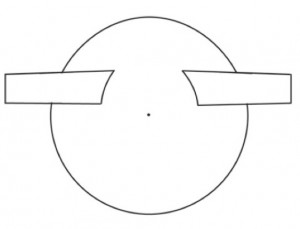
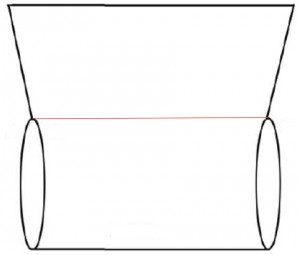
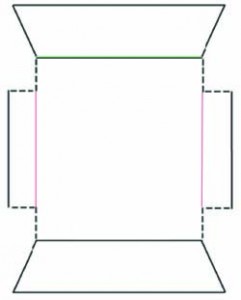
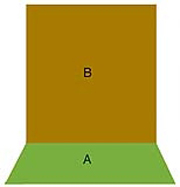
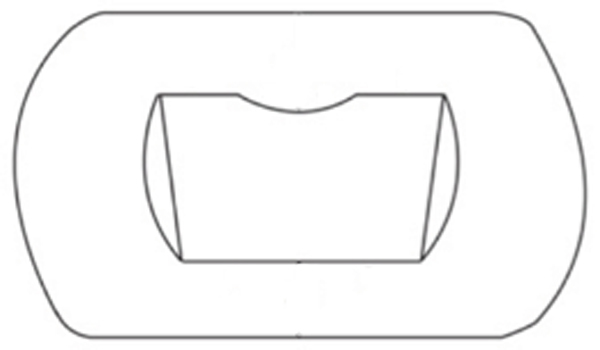
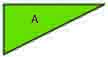
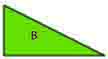
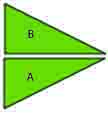
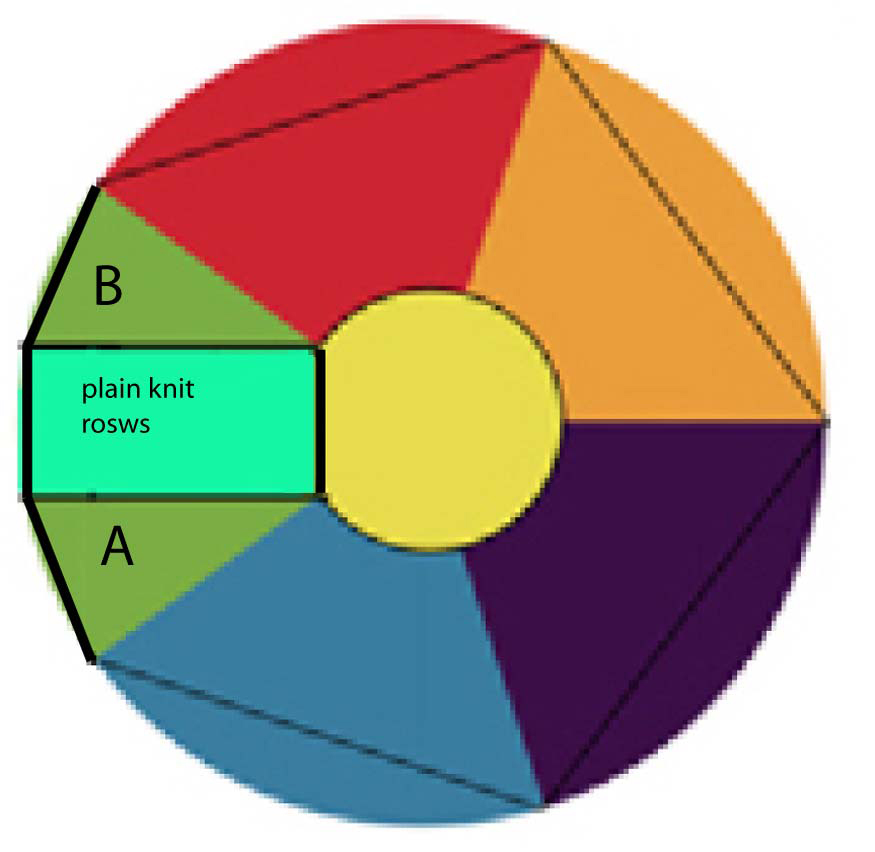
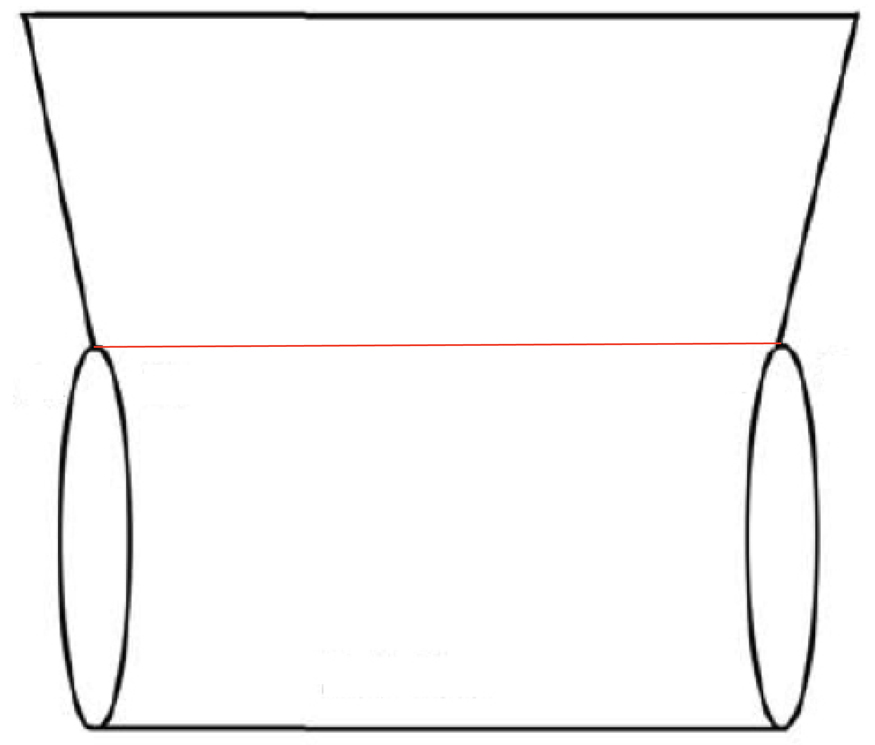
Now to coaxing a “circle” from a rectangle. Understanding how different stitch structures affect the length and width of fabric can help make it possible to “cheat” in shaping. The circle’s circumference needs to be significantly wider than the inner “square/rectangle”. The disparity in width between an every needle rib and single bed fabric is one way to help create the desired conclusion. Tuck stitches yield a knit  that is short and fat. Combining them in every needle rib with one or both beds tucking increases width dramatically when compared to single bed fabrics. One possible construct is to begin with every needle rib: figure A, switching to single bed fabric: figure B, and returning to same “shaping”  as A.

The completed outer edge needs to have stretch so as not to break as it folds over into a collar and surrounds the shoulders. Routine knitting  of this form as one piece will give one cast on and one bound off edge. It is possible by a variety of methods to have both edges match. My first sample even though binding off was quite loose wound up with the yarn breaking on wearing. A more successful approach was to knit section A as a tuck rib, B as a fabric that was mostly single bed, and removing the piece onto waste yarn and off the KM at that point . Section A was knit once more in same manner as at the bottom of the first piece, and then joined to A+B

The finished “garment” gets folded in half, and seamed toward its center,  leaving an opening for armholes. Upon its wearing, the joining seams on sides rotate to the front of the body,  so a good join is important. The alignment of the pattern repeat may have to be taken into account in addition to stitch gauge in sizing.

Entrelacs

Tuesday, June 28th, 2011

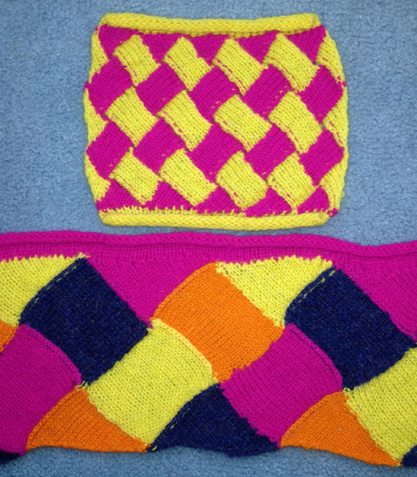
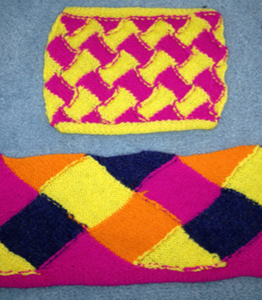
Entrelacs abound in knitting at the moment. In thinking about perhaps composing my thoughts for a post on the subject, I searched online and found some very good sources on this subject. One is found at how to knit a sweater .com. The author also shares an article on lace . Here are 2 of my teaching samples, executed on 4.5 mm machine

front view

rear view, ends woven in

Some knit collections

Tuesday, June 28th, 2011

From the more practical, to unusual, to pushing to outer limits.

Taking it to a garment 2: donuts

Saturday, June 25th, 2011

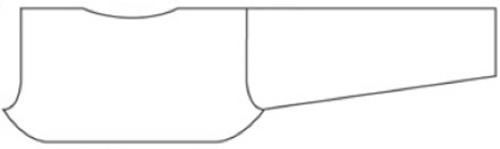
Removing a circle from the center of our pie yields the “donut”. The purpose and size of the “donut hole” can very from size needed to apply a central motif whether in knit, crochet, or other form, to one large enough to allow for insertion of a “back piece” that can be anything from a “square” to one that included a bit of shoulder, armhole, even neck shaping and an optional curve at the waist/hip area.Additional rows of plain knitting in the “donut” itself alter the final forms. Seaming can occur where preferred; direction of pattern repeats if in use further influence choice of seam placement.

If miter shapes are created in the knitting method, the corners of the triangles will want to “poke out”. This can be a purposeful design feature. If they are not wanted one way to soften them is to have stitches for at least an inch at the outer circumference of the circle knitting with no shaping in that area, adding a border, going the spiral route. Swatching helps determine preference in creating personal designs. Small scale paper collages sorting out geometric shapes and joins can inspire the large form variations.

Taking it to a garment 1: circles

Friday, June 24th, 2011

Vests and sweaters built on circular shapes offer some challenges. Shawls and shoulder wraps are much more forgiving, but garments, particularly if sleeves are added, can provide sizing and fitting challenges. Making a muslin in disposable knit yardage prior to the actual knitting allows for trial placement of armholes and testing of overall measurements prior to charting out garment and sleeve shaping. Slits for the armholes can easily be taped or stitched closed to suit, and in turn trial cut in a different location. Trimming or adding borders to circumference allows for visualizing size grading. This process helps spare the knitter regrets upon completion of the piece.

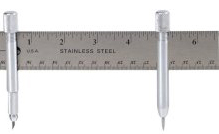
Drawing large circles is easy and accurate with a “yardstick compass”. Trammel points are available online and at many woodworking supply stores, etc. They convert any standard size yardstick for drawing arcs and circles up to 72 inches dia. Use a longer stick the same width and thickness as a yardstick and draw circles as large as you like. They are usually made of aluminum except for the steel point, measure about  3-1/2 inches in length.

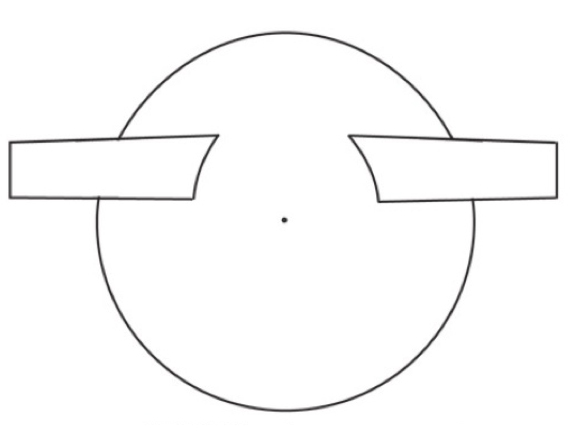
Some beginning guidelines for drafting: 1.Use your bust measurement as the circle’s diameter and draw the corresponding shape. Two or more strips of  freezer paper may be used as the drawing surface, temporarily fused onto the knit yardage, becoming the paper “pattern” for the piece and stabilizing the knit for cutting. 2. Measure your back from arm to arm to determine how far apart to place armholes, or obtain this measurement from any well fitting favorite. 3. Measure armhole depth from top of shoulder to 2-3 inches below armpit . 4. Draw lines for armholes and center horizontally within the body of the circle, shoulder measurement apart. Commercially written patterns are bountiful online and in magazines, and tend to center the armholes vertically as well. I prefer them shifted up a for a less bulky “collar”, and for placement of sleeves  with raglan or traditional caps. Binding off a few stitches at base and casting them on at the top of the slit create a slightly shaped for easing in the sleeve top. 5. Cut “armholes”, remove freezer paper if used, try on for fit, adjust as needed. 6. Back to more math!

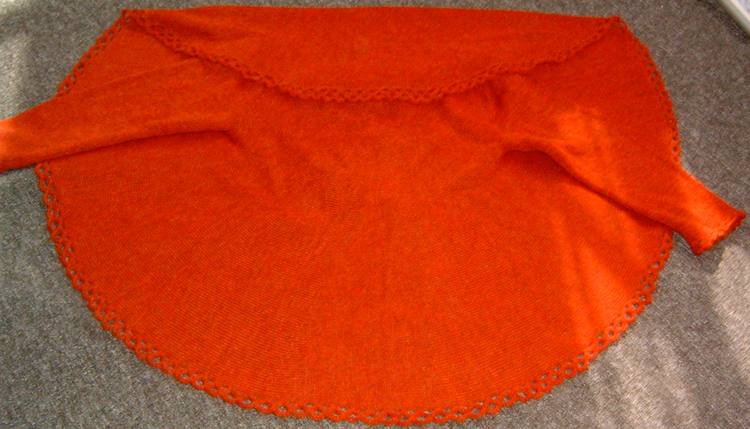
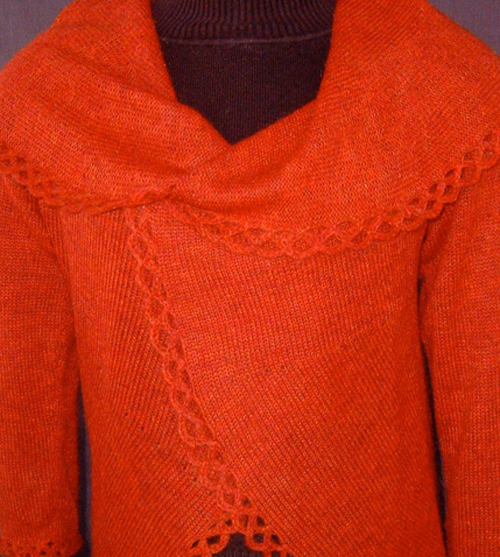
I made a series of long sleeved circular sweaters for sale in 2008. Discovered problems with photos in my photo library (new computer). These are an attempt at “restored” shots of one of the first such sweaters. The yarn was a fine Italian mohair.

close up

Back to that pie: a bit of holding

Wednesday, June 22nd, 2011

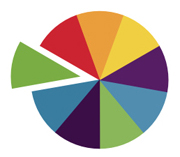
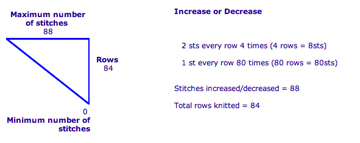
Holding/ short rowing is used to knit each wedge. The basic rule for holding is followed: stitches are brought into work on the carriage side, and into hold opposite the carriage to avoid floats. The greater the number of sections, for either the full circle or a donut, the smoother the curves at the outer circumference, as can be imagined in the form below, which divided into more sections than those 5 in our original calculation.

The “pie slices” begin and end on open stitches, ultimately requiring a join where the radii meet, using whatever method is preferred by the knitter. Assuming the knit carriage is on left and set for hold in the diagrams below, if all stitches are brought into hold except 1 on the carriage side (or number required by calculations for the individual piece), 2 rows are knit, and action is repeated until all needles are in work, the following shape starts to fill in and a miter with pointed edges is created.

If all the needles are in work, and one begins to bring them into hold opposite the carriage, one begins to fill in the shape creating the form below, and a spiral is created, with circumference edges more rounded.

Like shapes may be stacked sequentially. If shaping at the top of the initial triangle wedge is reversed however,  the following begins to occur.

Knit rows in between the triangles begin to create larger holes in center of pie, and a donut occurs. The donut center can be varied, the knit rows between triangles increased to suit. The illustration below shows some of the variables. The plain knit rows are another factor in smoothing that outer circumference.

Comments on my posts

Wednesday, June 22nd, 2011

I am happy to receive these. For the moment however,  I have cleared all comments from public viewing until I increase my learning curve on how to change and better control some of the wordpress template discussion features. For those that have been kind enough to ask whether it is “OK” to share my blog articles please feel free to do so; I would appreciate credit as the author  or a link to my site being provided as the source of the shared information. I will continue to read any comments left for me, and please also note, there is a contact me link to the right for direct e mail to me. TIA.

A way to dress up a tree…

Wednesday, June 22nd, 2011

The tree , and ways to use up lots of yarn!

So many ways to procrastinate!

Tuesday, June 21st, 2011

Ronaldo Fraga is the designer of the bottle cap fashion in the previous post. In attempting to view his site in english or his blog directly from his personal site link I had no luck with anything in any language other than Portuguese. With the latest version of Flash, the Google Chrome translator and Mac OS however, success! For me this is proving to be an interesting way to view/ understand text in sites and blog postings from foreign countries.

Ring pull tabs become fashion items

Monday, June 20th, 2011

Escama Studio is a “collaborative design studio based in California and Brazil.” Designs are manufactured by women’s collectives. Website includes a video on how pull tab bags are actually made, and a DIY crochet pop top tutorial. Yet another source of inspiration! The fact I do not buy any drinks in cans could be a major deterrent to this particular cause of knitting procrastination.